What is network management?

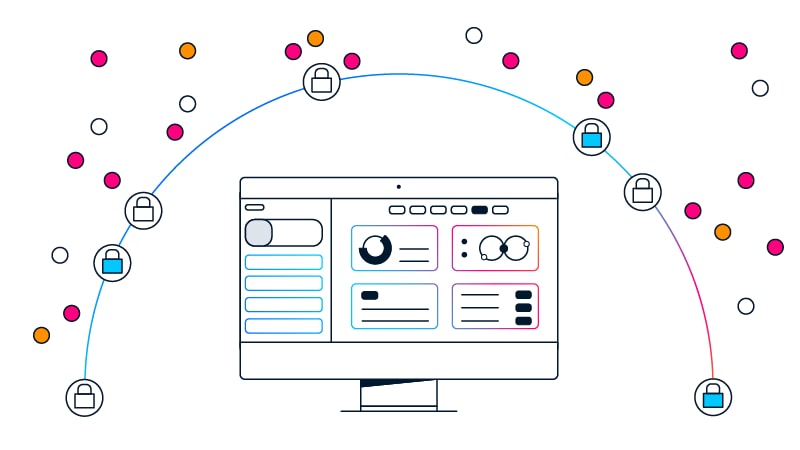
Network management encompasses both the essential processes and the specialized platforms used by IT and NetOps teams to configure, monitor, and optimize network performance. As organizations increasingly support distributed workforces, these systems have evolved to operate within cloud and hosted environments, leveraging advanced artificial intelligence and machine learning to automate routine tasks, provide predictive insights, and ensure robust network reliability.

Explore Cisco networking

How does a network management system do its job?

Network management systems collect data from connected network devices such as switches, routers, access points, and client devices. They also give network administrators fine-grained control over how those devices operate and interact with one another. AI-powered systems can analyze vast telemetry and log data in real time to detect anomalies, predict failures, and recommend or automate remediation actions.

The data captured from these devices is used to proactively identify performance issues, monitor security and segmentation, and accelerate troubleshooting. 

What kinds of devices can a network management system control?

Many network management platforms started as a way to control LANs. As enterprise networks increased in complexity and diversity, these management planes extended their capabilities into SD-WANnetwork security, and IoT.

The most effective platforms combine devices and sensors into a single view of network traffic, making it easy for IT not only to monitor but to protect and remediate performance issues.

How do network elements send data to the system?

Network management systems collect real-time data from network elements, such as switchesrouters, and access points, as well as from endpoint devices, such as mobile phones, laptops, and desktops. This information is used to provide insights into the health of the network.

Typically, the data is collected and sent to the system in one of two ways:

  • SNMP: The Simple Network Management Protocol is an open standard and has been widely supported by most manufacturers of network elements since the early 1990s. SNMP queries each element in the network and sends each response to the network management system.
  • Streaming telemetry: A software agent installed in a network element allows for the automatic transmission of key performance indicators in real time. Streaming telemetry is rapidly replacing SNMP, because it is more efficient, can produce many more data points, and is more scalable. And telemetry standards, such as NETCONF/YANG, are gaining traction as ways to offer the same multivendor support as SNMP.

What are the most important network management capabilities?

When it comes to managing a complex or highly distributed network, the three most critical capabilities of a network management tool are directly tied to how well that platform unifies sites and remote workers.

First, ease of adoption and deployment directly affects the value that IT teams will get from the tool. There's an adage in software as a service (SaaS)—"Adoption is the new ROI"—and the same is true for network management. If it's not easy to deploy and use on a daily basis, it will quickly fall by the wayside.

It's also key to find a platform that can manage the full scope of the network, from access to WAN to IoT.

And finally, the security, control, and treatment of network data must have equal priority, no matter how you choose to deploy.

What are the top myths about network management systems?

Networks become more complicated as the number of devices and applications connected to them grows, but a complicated network doesn't require a complicated-to-use network management system. Today's network management systems are open, extensible, and software-driven to help accelerate and simplify network operations while lowering costs and reducing risk.

Powered by deep intelligence and integrated security, these systems deliver automation and assurance across the entire network, whether big or small, resulting in better efficiency and cost-savings while offering end-to-end visibility, automation, and insight.

Open APIs and standards such as OpenConfig mean users can optimize their networks with solutions that best fit their business objectives.

How can network management systems meet the demands of hybrid work?

In today's hybrid work environment, organizations face a variety of new challenges. The challenges include a highly distributed and mobile workforce, an inconsistent range of quality connectivity options, and the need to rapidly implement tools for collaboration, support, and business continuity.

In turn, network management systems need to be agile, with built-in intelligence and automation to facilitate decision making and reduce errors. Security must be inherent and prioritized to help ensure that networks and the devices connected to them are secure from the core to the edge.

Operational models for network management systems

Cloud-based

Agility, flexibility, and scalability

Cloud-based network management systems provide the flexibility and reach required to support hybrid work environments and scale across hundreds or thousands of branch sites. These platforms simplify remote site provisioning and offer centralized monitoring across highly distributed networks.

Through open APIs and robust application ecosystems, cloud-based platforms deliver a high degree of configurability and customization. Increasingly, these platforms leverage AI-driven automation and advanced analytics supported by large data lakes and cloud computing to enable predictive issue detection, automated root-cause analysis, and continuous performance optimization.

On-premises

On-premises network management systems are well suited for large campus networks requiring greater performance and scalability. These systems increasingly incorporate AI/ML capabilities to support automated anomaly detection, predictive maintenance, and intelligent troubleshooting. Organizations with data sovereignty requirements benefit from on-premises deployments, as all data remains onsite while still enabling AI-driven assurance and automation.

Large networks often generate substantial volumes of data through telemetry and SNMP. AI-enhanced analytics help process this data at scale, converting raw telemetry into actionable insights in real time.

On-premises systems typically consist of high-capacity servers capable of processing this data to deliver the insights required for effective network management. For this reason, on-premises servers are usually located at the network core. While accessible via the internet, remote access requires a VPN connection.

The unified operations platform for AgenticOps

Cisco Cloud Control is the unified operations platform for AgenticOps, giving teams and AI agents one environment to manage the Cisco estate, resolve cross-domain issues, and extend the platform with custom apps, agents, and integrations.

Explore Cisco Cloud Control

Network management platforms

On-premises network management

Respond to changes and challenges faster and more intelligently with Cisco Catalyst Center.

Cloud-based network management

Simplify IT management and work from anywhere with the Cisco Networking Platform.

SD-WAN management

Quickly deploy and monitor your entire SD-WAN fabric with ease using the powerful Cisco Catalyst SD-WAN Manager platform.

Data center and cloud network management

Configure, operate, and analyze your network from one place across data center networks with Cisco Nexus Dashboard.

Network management enhancements

Modern networks are growing exponentially and becoming much more functionally complex. As a result, many network management systems are enhanced with advanced capabilities, such as automation, assurance, and monitoring, that leverage technologies such as AI/ML.

These advanced features simplify the day-to-day running of the network while helping IT to respond to changes and challenges faster and more intelligently.

How are these advanced capabilities used?

  • Network automation is the process by which repetitive tasks such as configuration and software upgrades can be performed automatically. Network management systems push out new software updates and updated configuration files, saving IT time and improving performance. AI-powered automation extends this further by enabling proactive capacity planning, where systems analyze traffic patterns and usage trends to recommend infrastructure adjustments before capacity constraints impact performance.
  • Network assurance leverages AI/ML to provide IT with better insights into the health of the network, clients, and applications. IT can use it to identify and correct issues such as a poor client experience or wireless coverage gaps. AI/ML also enables predictive maintenance, allowing systems to detect early signs of hardware degradation or performance anomalies and alert IT teams before failures occur, reducing downtime and unplanned outages.
  • AI-driven security analytics enhance network assurance by continuously monitoring network traffic for unusual patterns or behaviors that may indicate security threats. These systems can automatically flag anomalies, prioritize risks, and, in some cases, initiate automated remediation actions, strengthening the network's overall security posture.
  • Cost-effective consumption made possible by software subscriptions is offered by many vendors of network management systems. Users can subscribe to various tiers of software that deliver value where and when needed, including access to advanced AI/ML-powered features as they become available.

Related topics

What is network automation?

Network automation is the process of automating configuration and management network devices.

What is network monitoring?

Network monitoring helps administrators run networks optimally and find deficiencies quickly.

What is network provisioning?

Network provisioning allows network access to authorized users and devices with a focus on security.

What is network topology?

Network topology is diagramming a network to map the way nodes are placed and interconnected.

What is software-defined WAN (SD-WAN)?

SD-WAN is a software-defined approach to managing a wide-area network, or WAN.

What is configuration management?

Configuration management identifies and tracks IT assets, their status, and their relationships.

Cisco Cloud Control

The unified operations platform for AgenticOps

Cisco Cloud Control is the unified operations platform for AgenticOps. It brings the Cisco estate and connected third-party systems into one operational environment, giving teams and AI agents the context and control to manage infrastructure, resolve issues across IT domains, and extend the platform with custom apps, agents, and integrations.